Friday, June 22, 2012
Imagine the world without plastic
No, I can't either. Will we ever be able to clean up what we have done? Can we stop?


Wednesday, June 20, 2012
Standing up for logic and reason
Missouri tries to pass a 'Right to Pray' act that sneaks in a part about kids being able to refuse to be taught about evolution and science. Death threats to the woman reporter who wrote the expose.
Teaching people not to smoke:
A simple explanation of how 'Obamacare' works.
Birth control pills work.
Protecting our bees.
Teaching people not to smoke:
A simple explanation of how 'Obamacare' works.
Birth control pills work.
Protecting our bees.
Tuesday, June 19, 2012
So... why are we buying anything grown or made in China?
China, continuing the poisonous trend:
Mercury in baby formula.
Pills for human consumption containing human remains.
China poisons more pets:
"From steroid-spiked pork to glow-in-the-dark meat to recycled cooking oil collected from sewers, a series of illnesses and scandals linked to tainted food has put officials on guard. But tougher measures have had little effect amid an official culture of secrecy."
Watermelons spiked with growth chemicals explode in the fields... so the farmers feed the forchlorfenuron saturated melons to fish and pigs.
Waste water forced into pigs going to market.
Fresh milk tainted with melamine and toxic substances extracted from leather scraps... killed 6 children in China and sickened 300,000.
Rice is contaminated with heavy metals like cadmium.
Fake rice made from plastic, potatoes and resin.
Pulverized lime added to bleaching agents widely used in flour production. Pulverized lime damages the lungs and the entire respiratory system.
Cadmium in children's toys and little girl jewelry. Lead in toys: Thomas the Tank Engine, baby bibs, cub scout badges, wooden blocks. Formaldehyde in candy, in baby clothing. Coma-inducing date rape drug in toys.
Asbestos in toys.
"The rampant use of chemical additives in animal feed can be traced to 1999. According to Gao Yinxiang, the research and development of high-protein feed additives was a hot field among scientists about 10 years ago due to shortage of animal fodder in the country at the time.
From that time, it's hard to define the exact role that scientists played in the evolution of the melamine scandal. Yet scientists certainly contributed to it by developing unsafe protein alternatives. Many Chinese are now calling on scientists to examine their conscience before making profits at the expense of public safety."
Melamine in pet food kills house pets in the US. Melamine is found in wheat, corn and rice gluten.
China says no to inspections and destroys evidence.
Rat poison in breakfast porridge.
Pesticide-laden pea pods, drug-laced catfish, filthy plums and crawfish contaminated with salmonella. Dried apples preserved with a cancer-causing chemical. Scallops and sardines coated with putrefying bacteria. Mushrooms laced with illegal pesticides.
Toothpaste with diethylene glycol, a toxic chemical used in engine coolants.
Highly toxic puffer fish sold as monk fish.
Fake blood protein.
Wild mice used for meat.
Defective tires.
Use of illegal drift nets.
Fake kosher food.
Insecticide-tainted dumplings.
More than 40 percent of drinking water in rural China is unfit for drinking.
Poisoned chocolate.
Toxic drywall which caused houses to be uninhabitable.
Fake Cisco routers
Misuse and overuse of antibiotics. "Studies in China show a "frightening" increase in antibiotic-resistant bacteria such as staphylococcus aureus bacteria, also know as MRSA."
The list will inevitably be added to. When are we going to learn this is what happens to corporations when there is no regulation?
Asbestos, Cadmium, China, Flour, Forchlorfenuron, Gluten, Honey, Melamine, Pets, Pigs, Pork, Pulverized Lime, Toothpaste, Toys, Vinegar,Watermelon
BEIJING—The discovery of unusual levels of mercury in Chinese-produced infant formula reignited fears about the safety of the country's scandal-ridden dairy industry, and underlined the severe challenges the government faces in improving food safety.So, I'll add one more to the list:
Mercury in baby formula.
Pills for human consumption containing human remains.
China poisons more pets:
November 18, 2011 — The U.S. Food and Drug Administration has issued an important bulletin warning consumers that chicken jerky products (also marketed as chicken tenders, strips or treats) may be associated with serious illness in dogs.And here is the ever-expanding list:
Over the past 12 months, the FDA has observed an increase in the number of complaints regarding canine illnesses associated with consumption of chicken jerky products imported from China.
These complaints have been reported to the government by both dog owners and veterinarians.
But according to FSN, the biggest reason to avoid ultra-filtered honey is that pollen is the only sure-fire way to trace the source of honey to a geographic location. As a result ultra-filtered honey is often used to mask the shady origins of certain kinds of honey -- especially Chinese honey, which is subject to heavy import tariffs on account of its frequent contamination by heavy metals and illegal antibiotics. Chinese honeymakers ultra-filter their honey, and then ship it through byzantine paths, to sneak their sham product onto American grocery shelves without being hit with a tariff.Vinegar from China kills 11 people.
"From steroid-spiked pork to glow-in-the-dark meat to recycled cooking oil collected from sewers, a series of illnesses and scandals linked to tainted food has put officials on guard. But tougher measures have had little effect amid an official culture of secrecy."
Watermelons spiked with growth chemicals explode in the fields... so the farmers feed the forchlorfenuron saturated melons to fish and pigs.
Waste water forced into pigs going to market.
Fresh milk tainted with melamine and toxic substances extracted from leather scraps... killed 6 children in China and sickened 300,000.
Rice is contaminated with heavy metals like cadmium.
Fake rice made from plastic, potatoes and resin.
Pulverized lime added to bleaching agents widely used in flour production. Pulverized lime damages the lungs and the entire respiratory system.
Cadmium in children's toys and little girl jewelry. Lead in toys: Thomas the Tank Engine, baby bibs, cub scout badges, wooden blocks. Formaldehyde in candy, in baby clothing. Coma-inducing date rape drug in toys.
Asbestos in toys.
"The rampant use of chemical additives in animal feed can be traced to 1999. According to Gao Yinxiang, the research and development of high-protein feed additives was a hot field among scientists about 10 years ago due to shortage of animal fodder in the country at the time.
From that time, it's hard to define the exact role that scientists played in the evolution of the melamine scandal. Yet scientists certainly contributed to it by developing unsafe protein alternatives. Many Chinese are now calling on scientists to examine their conscience before making profits at the expense of public safety."
Melamine in pet food kills house pets in the US. Melamine is found in wheat, corn and rice gluten.
China says no to inspections and destroys evidence.
Rat poison in breakfast porridge.
Pesticide-laden pea pods, drug-laced catfish, filthy plums and crawfish contaminated with salmonella. Dried apples preserved with a cancer-causing chemical. Scallops and sardines coated with putrefying bacteria. Mushrooms laced with illegal pesticides.
Toothpaste with diethylene glycol, a toxic chemical used in engine coolants.
Highly toxic puffer fish sold as monk fish.
Fake blood protein.
Wild mice used for meat.
Defective tires.
Use of illegal drift nets.
Fake kosher food.
Insecticide-tainted dumplings.
More than 40 percent of drinking water in rural China is unfit for drinking.
Poisoned chocolate.
Toxic drywall which caused houses to be uninhabitable.
Fake Cisco routers
Misuse and overuse of antibiotics. "Studies in China show a "frightening" increase in antibiotic-resistant bacteria such as staphylococcus aureus bacteria, also know as MRSA."
The list will inevitably be added to. When are we going to learn this is what happens to corporations when there is no regulation?
Asbestos, Cadmium, China, Flour, Forchlorfenuron, Gluten, Honey, Melamine, Pets, Pigs, Pork, Pulverized Lime, Toothpaste, Toys, Vinegar,Watermelon
Monday, June 18, 2012
Vote Rigging in Wisconsin?
And every other election in the US?
If vote-rigging prospers, none may call it vote-rigging. It simply becomes the new norm. Once again, the universal laws of statistics apply only outside U.S. borders. The recall vote in Wisconsin produced another significant 7% discrepancy between the unadjusted exit poll and the so-called "recorded vote." In actual social science, this level of discrepancy, with the results being so far outside the expected margin of error would not be accepted.
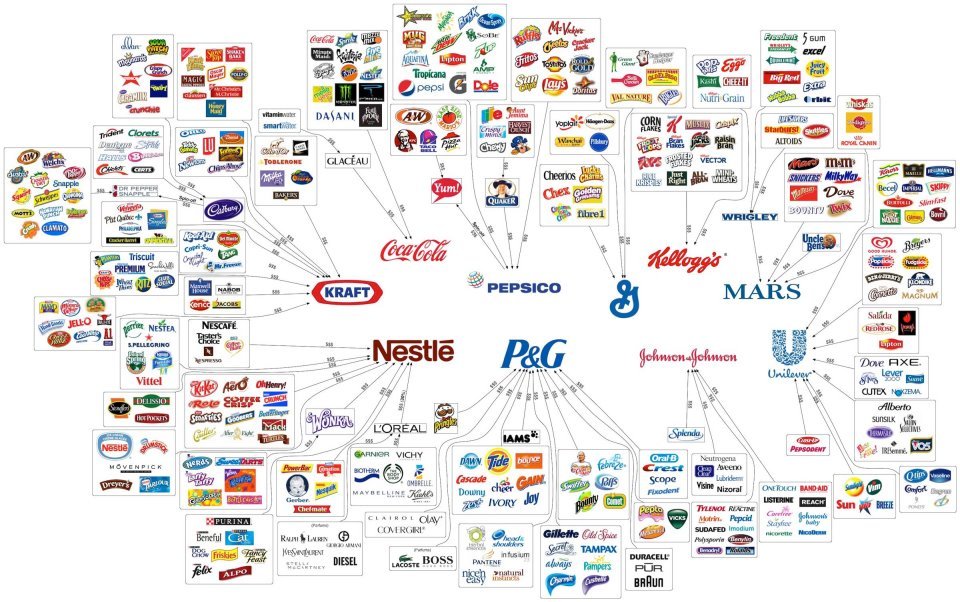
Only a few monolithic companies control our food
Does it make you wonder at all the health problems such as obesity, diabetes, high blood pressure, food allergies that are found in abundance in the United States and not as much elsewhere?
Take a look at the diagram and ask yourself if these companies have your health in mind or only your money.
And then notice that food stamps tie into to this as well...
Update 6/18: From the Guardian article about obesity:
Update 6/18: From the Guardian article about obesity:
The story begins in 1971. Richard Nixon was facing re-election. The Vietnam war was threatening his popularity at home, but just as big an issue with voters was the soaring cost of food. If Nixon was to survive, he needed food prices to go down, and that required getting a very powerful lobby on board – the farmers. Nixon appointed Earl Butz, an academic from the farming heartland of Indiana, to broker a compromise. Butz, an agriculture expert, had a radical plan that would transform the food we eat, and in doing so, the shape of the human race. Butz pushed farmers into a new, industrial scale of production, and into farming one crop in particular: corn. US cattle were fattened by the immense increases in corn production. Burgers became bigger. Fries, fried in corn oil, became fattier. Corn became the engine for the massive surge in the quantities of cheaper food being supplied to American supermarkets: everything from cereals, to biscuits and flour found new uses for corn. As a result of Butz's free-market reforms, American farmers, almost overnight, went from parochial small-holders to multimillionaire businessmen with a global market. One Indiana farmer believes that America could have won the cold war by simply starving the Russians of corn. But instead they chose to make money. By the mid-70s, there was a surplus of corn. Butz flew to Japan to look into a scientific innovation that would change everything: the mass development of high fructose corn syrup (HFCS), or glucose-fructose syrup as it's often referred to in the UK, a highly sweet, gloppy syrup, produced from surplus corn, that was also incredibly cheap. HFCS had been discovered in the 50s, but it was only in the 70s that a process had been found to harness it for mass production. HFCS was soon pumped into every conceivable food: pizzas, coleslaw, meat. It provided that "just baked" sheen on bread and cakes, made everything sweeter, and extended shelf life from days to years. A silent revolution of the amount of sugar that was going into our bodies was taking place. In Britain, the food on our plates became pure science – each processed milligram tweaked and sweetened for maximum palatability. And the general public were clueless that these changes were taking place.Update 6/20:
The US long-term strategy was to dominate the global market in grain and agriculture commodities, as outlined in the early 1970s by Richard Nixon. This policy coincided with taking the dollar off the gold exchange standard in August 1971 to make US grain exports competitive in the rest of the world. However, in order for the US to become the world's most competitive agribusiness producer, it had to replace traditional American family-based farming with the now-widespread huge "factory-farm" production. In other words, traditional agriculture was systematically replaced with agribusiness production through changes in domestic policy. For example, domestic farm programs that had previously protected smaller farm incomes were phased out during Nixon's term in office. This policy was then exported to developing countries in a bid to make US agribusiness more competitive and to get a hold into foreign markets: The Nixon Administration began the process of destroying the domestic food production of developing countries as the opening shot in an undeclared war to create a vast new global market in "efficient" American food exports. Nixon also used the post-war trade regime known as the General Agreement on Tariffs and Trade (GATT) to advance this new global agribusiness export agenda.[2] In Henry Kissinger's 1974 report "National Security Study Memorandum 200" (NSSM 200), he directly targeted overseas food aid as an "instrument of national power."[3] The policy shifts during the 1970s were toward increased deregulation, which meant increased private regulation by the large and powerful global corporations. This led to an increase in corporate mergers and the rise of transnational corporations (which today often have larger gross domestic products than many nation states).[4] As large corporate agribusinesses were creating their food production, storage and distribution monopoly, smaller domestic farms were going bankrupt and closing. (Although this trend was predominantly occurring within the US, it later spread to other developed nations, which were forced to "modernize" their agricultural industry to compete with global trade.) For example, between 1979 and 1998, the number of US farmers dropped by 300,000 and by the end of the 1990s, the agriculture (in the US at least) was dominated by large commercial agribusiness interests. The US also operated a foreign policy of offering financial assistance "to developing countries via the World Bank in return for these countries to open their markets up to cheap US food imports and hybridized seeds."[5] By the beginning of the 21st century, world supplies of cereal were under the control of a few US-based monopolies. Four large agrochemical/seed companies - Monsanto, Novartis, Dow Chemical and DuPont - controlled more than 75 percent of the US's seed corn sales and 60 percent of soybean seed sales. By the merging of giant agrochemical and seed companies, livestock could be fed on a huge diet of drugs in order to stimulate increased growth. It has been estimated that in recent years the largest users of antibiotics and similar pharmaceutical products are not humans, but animals, which consumed 70 percent of all pharmaceutical antibiotics. Statistics show, quite shockingly, that the use of antibiotics by US agribusiness increased from 500,000 pounds to 40 million pounds (an 80-fold increase by weight) from 1954 to 2005. As a consequence, the Center for Disease Control in the US has reported an "epidemic" rise in food-related diseases in humans as a result of eating meat containing large quantities of antibiotics. One Harvard University researcher, Ray Goldberg, who set up a research group to examine the revolution in agribusiness (including genetically modified organisms), reported: "the genetic revolution is leading to an industrial convergence of food, health, medicine, fiber and energy business."[6]
Friday, June 15, 2012
Vagina monologues
The frantic silencing of the women Michigan state representatives who dared to mention women's naughty bits didn't prevent one of them from saying: "If they are going to legislate my anatomy, I see no reason why I cannot mention it.”
So I will mention this again because they want to make our sex lives their business, they must make their sex lives our business.: my idea for an amendment:
Any politician who supports negating a woman's right for reproductive control must sign a legal document that states he (or she) has never and will never use (nor his/her significant other) an abortifacient (a hormonal birth control pill), has never masturbated, never had an abortion nor encouraged anyone to have one, had sex with anyone before marriage, had sex only with spouse and had sex only for procreation. And the politician must agree that after extensive research if they have lied they must resign.
Thursday, June 14, 2012
Why am I in this handbasket and why is it getting so warm?
Drowning in our own garbage.
Let the United States Holy Wars begin! Lo, the Lord sayeth, smite them, smite them, smite them!!
Surviving the flesh eating virus, lightning, and boobs.
The dangers of for-profit schools and prisons, and why the Republicans are embracing them wholeheartedly: More bodies, more money to wring out of them, and no oversight! Such a deal! Quality of schooling and dedication to returning prisoners to society are not involved:
Let the United States Holy Wars begin! Lo, the Lord sayeth, smite them, smite them, smite them!!
Surviving the flesh eating virus, lightning, and boobs.
The dangers of for-profit schools and prisons, and why the Republicans are embracing them wholeheartedly: More bodies, more money to wring out of them, and no oversight! Such a deal! Quality of schooling and dedication to returning prisoners to society are not involved:
Leonard invokes the “numerous lawsuits” against a company called Corinthian Colleges, including one in which a former admissions officer described high-pressure, even bullying recruitment tactics at one of the company’s schools, Everest: “The ultimate goal was to essentially make [potential students] wallow in their grief,” the admission officer’s affidavit says, feel that pain of having accomplished nothing in life, and then use that pain as their “reasons” to compel the leads to schedule an in-person meeting with an Everest admissions representative. A spokesman for Corinthian denied this account of its recruiting, but, as Leonard writes, “there’s little question that an obsessive focus on constantly boosting enrollment is crucial to survival in the for-profit college world. Sky-high withdrawal rates plague the industry.”Further down in the same article:
Chang’s series in the Times-Picayune, meanwhile, took a close look at how it is that Louisiana nearly doubled its prison population in the past twenty years, to become the state with the highest per-capita incarceration rate in the country—the highest in the world, in fact. (Adam Gopnik has written for The New Yorker about our mass-incarceration culture.) What Chang finds is a system under which the state began housing the majority of its inmates in for-profit facilities, many of them run by cash-strapped local sheriffs and some by private prison companies. Both have a financial incentive to keep the prisons full— like hotels, prisons in Louisiana don’t want any vacancies. “If the inmate count drops, sheriffs bleed money,” writes Chang. “Their constituents lose jobs. The prison lobby ensures this does not happen by thwarting nearly every reform that could result in fewer people behind bars.”
Subscribe to:
Posts (Atom)