Showing posts sorted by relevance for query elliot abrams. Sort by date Show all posts

Monday, April 09, 2007

Those attacks on Pelosi's visit to Syria?

Looks like it's Elliot Abrams. Think Progress:

Jim Lobe writes, “There is little doubt among Middle East analysts here that [Deputy National Security Adviser Elliott] Abrams is playing a lead role in White House efforts to discredit Pelosi for meeting with Assad,” just as he did in a similar incident in 1987.

UPDATE: “At the one and only meeting between Imad Moustapha, the Syrian ambassador to the United States, and a White House official, one of President Bush’s closest advisers, Elliot Abrams, said the administration saw no good reason to ‘reward’ Syria by opening discussions.”
This man is a real neocon:
The same confusion was apparent at the White House, where National Security Council (NSC) official Elliott Abrams - the architect of US policy in the Middle East - was growing increasingly irritated with Rice's attempt to restart Israeli-Palestinian talks. Abrams, supported by officials in the Office of the Vice President, had consistently argued that the Israeli-Palestinian conflict was a morass better left in the hands of the Israelis. That viewpoint was clear from the first days of the administration of President George W Bush, when Vice President Dick Cheney knocked down any attempt to re-engage with Israelis and Palestinians.

A Republican Party stalwart describes Cheney's views in blunt terms: "People would come to Bush and say we have to get focus on the peace process, and Cheney would sit there and say, 'Mr President, don't do it. These people have been fighting for 50 years. To hell with them. And look at what happened to [former president Bill] Clinton when he tried. It just got worse.' And Bush would nod his head and that would be the end of the discussion."

The NSC's concerns over Rice had deepened with reports that she had gone directly to Bush on a number of foreign-policy issues, circumventing both Abrams and Cheney. While it is traditional for a US secretary of state to confer directly with a president, Abrams, Rice and State Department official David Welch (the assistant secretary for Near Eastern affairs) had formed a seemingly unbreakable triumvirate on the Israeli-Palestinian conflict.
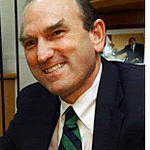
Photo Sharing and Video Hosting at Photobucket

Tuesday, February 27, 2007

One reason Condi Rice has not achieved much

Is that Elliot Abrams is diligently working behind the scenes to undo what she does:
Photobucket - Video and Image Hosting

Abrams' personal influence over Bush could not possibly match Rice's, but his bureaucratic skills and political connections - notably to the so-called "Israel lobby" of pro-Likud Jewish organizations and the Christian Right - give him considerable clout. According to various sources, Abrams has been working systematically to undermine any prospect for serious negotiations designed to give substance to Rice's hopes - and increasingly impatient demands by King Abdullah of Saudi Arabia - of offering the Palestinians a "political horizon" for a final settlement.

"The Bush administration has done nothing to press Israel to deliver on its commitments, beyond Washington's empty rhetoric about a two-state 'political horizon'," Henry Siegman, the longtime director of the US/Middle East Project at the influential Council on Foreign Relations, wrote in the International Herald Tribune just last week.

"Every time there emerged the slightest hint that the United States may finally engage seriously in a political process, Elliott Abrams would meet secretly with Olmert's envoys in Europe or elsewhere to reassure them that there exists no such danger," Siegman complained.

After the resignation of Cheney's chief of staff, I Lewis Libby, and the departure from the Pentagon nearly two years ago of Paul Wolfowitz and Douglas Feith, Abrams became the US administration's most influential neo-conservative, particularly regarding Middle East policy, which he oversees as deputy national security adviser for global democracy strategy.

Photobucket - Video and Image Hosting

Tuesday, March 06, 2007

Saudis behind the scenes

Outmaneuvering Elliot Abrams and the neocons. Fascinating article on the chess game going on in world politics. The article offers this interesting insight:
The same confusion was apparent at the White House, where National Security Council (NSC) official Elliott Abrams - the architect of US policy in the Middle East - was growing increasingly irritated with Rice's attempt to restart Israeli-Palestinian talks. Abrams, supported by officials in the Office of the Vice President, had consistently argued that the Israeli-Palestinian conflict was a morass better left in the hands of the Israelis. That viewpoint was clear from the first days of the administration of President George W Bush, when Vice President Dick Cheney knocked down any attempt to re-engage with Israelis and Palestinians.

A Republican Party stalwart describes Cheney's views in blunt terms: "People would come to Bush and say we have to get focus on the peace process, and Cheney would sit there and say, 'Mr President, don't do it. These people have been fighting for 50 years. To hell with them. And look at what happened to [former president Bill] Clinton when he tried. It just got worse.' And Bush would nod his head and that would be the end of the discussion."

The NSC's concerns over Rice had deepened with reports that she had gone directly to Bush on a number of foreign-policy issues, circumventing both Abrams and Cheney. While it is traditional for a US secretary of state to confer directly with a president, Abrams, Rice and State Department official David Welch (the assistant secretary for Near Eastern affairs) had formed a seemingly unbreakable triumvirate on the Israeli-Palestinian conflict.

Friday, July 20, 2007

Like the undead zombies

Here's proof that if you don't stake them through the heart, they keep on coming back to life:

A few months ago, Seymour Hersh reported that a White House official and Iran Contra alum, Elliot Abrams, had recently led a "lessons learned" discussion about Iran Contra:

Iran-Contra was the subject of an informal “lessons learned” discussion two years ago among veterans of the scandal. Abrams led the discussion. One conclusion was that even though the program was eventually exposed, it had been possible to execute it without telling Congress. As to what the experience taught them, in terms of future covert operations, the participants found: “One, you can’t trust our friends. Two, the C.I.A. has got to be totally out of it. Three, you can’t trust the uniformed military, and four, it’s got to be run out of the Vice-President’s office”—a reference to Cheney’s role, the former senior intelligence official said.
Today the Washington Post reports that the White House may have taken that lesson to heart. It has determined, the Post reports, that in legal disputes between the Congress and the White House over executive privilege, game over, because the White House has decided no US attorney can uphold a contempt of Congress decree:

Bush administration officials unveiled a bold new assertion of executive authority yesterday in the dispute over the firing of nine U.S. attorneys, saying that the Justice Department will never be allowed to pursue contempt charges initiated by Congress against White House officials once the president has invoked executive privilege.