(update for the credits):
Himachal Pradesh, India: A crowd watching a wrestling match at a local fair.
Portfolio - Homeland category winner, by Poras Chaudhary, India.
Isn't it beautiful?
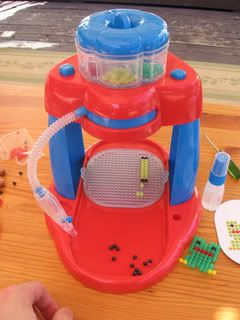
WASHINGTON (AP) -- Millions of Chinese-made toys have been pulled from shelves in North America and Australia after scientists found they contain a chemical that converts into a powerful date rape drug when ingested. Two children in the U.S. and three in Australia were hospitalized after swallowing the beads.
With only seven weeks until Christmas, the recall is yet another blow to the toy industry -- already bruised by a slew of recalls this past summer. In the United States, the toy goes by the name Aqua Dots, a highly popular holiday toy distributed by Toronto-based Spin Master Toys. They are called Bindeez in Australia, where they were named toy of the year at an industry function earlier this year.
It could not immediately be learned whether Aqua Dots beads are made in the same factories as the Bindeez product. Both are sold by Australia-based Moose Enterprises.
The toy beads are sold in general merchandise stores and over the Internet for use in arts and crafts projects. They can be arranged into designs and fused together when sprayed with water.
Scientists say a chemical coating on the beads, when ingested, metabolizes into the so-called date rape drug gamma hydroxy butyrate. When eaten, the compound -- made from common and easily available ingredients -- can induce unconsciousness, seizures, drowsiness, coma and death.
Naren Gunja from Australia's Poisons Information Center said the drug's effect on children was "quite serious ... and potentially life-threatening."
Whether the Bush administration is up to these challenges remains to be seen. A recent Washington Post article reports that the administration has opposed new safety rules for foreign foods, and that it views China more as a market for American products than as the source of potentially contaminated products later found in the United States. Add to that conservatives' general anti-regulation beliefs and their faith in unregulated markets, and one begins to have some doubts about reform. But the resumption of high-level trade talks with China this week gives the administration a good opportunity to dispel them by imposing stricter regulations on imports from China.And Tom Legg from Daai Tou Laam, look at what the Chinese do to their own children with pollution:
The administration should also promptly address the problem of the overburdened FDA, the firewall that is supposed to keep all of us safe. And how safe are we right now? Are we any better off than in the era before the passage of the 1938 food safety legislation? To return to the glycerin story, in early May of this year the FDA sent out an advisory which recommends -- but does not require -- that pharmaceutical manufacturers in this country test solvents marked as glycerin for the possible presence of diethylene glycol. Our next major food-safety scandal may be just around the corner.
While China may imprison environmental activists who cross cadres and their business cronies, the news from a couple of days ago says the chickens are already coming home to roost as mainland birth defects have risen by 40% in the last 6 years.The report said between two and three million Chinese babies are born with "visible defects" each year and up to 12 million more would develop defects later in life. The director of family planning in Shanxi province said the defects were directlty related to pollution.
Lovely.
It surprised me a bit the first time that I read the product was made in Hong Kong, since most of these items are made in Shenzhen with the Hong Kong office handling sales and logistics. (The rather paltry division of labour between Hong Kong and the mainland is a topic of a post for another time.)
But further down comes the real kicker.
The toys were supposed to use 1,5-pentanediol, a nontoxic compound found in glue, but instead contained the harmful 1,4-butanediol, which is widely used in cleaners and plastics.
...
It's not clear why 1,4-butanediol was substituted. However, there is a significant difference in price between the two chemicals. The Chinese online trading platform ChemNet China lists the price of 1,4 butanediol at between about $1,350-$2,800 per metric ton, while the price for 1,5-pentanediol is about $9,700 per metric ton.
Understand? Companies outsource to China to get cheaper production costs. And the offices in the US and EU are constantly leaning on sales agents in HK and the mainland to come up with low low prices. Guess what that means? Low low quality with lots of cut corners. And with a little forged paperwork and a lot of levels of suppliers looking for and providing plausible deniability, the low low quality can become a threat to health, especially when the end users' government is committed to gutting government consumer safety protections.
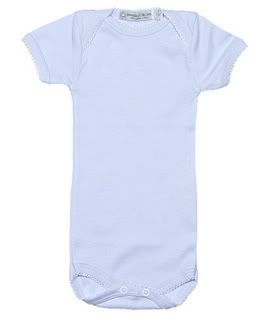
Poison in children's clothing is emerging as the latest health risk from China.
TV3's Target programme will this week detail how scientists found formaldehyde in woollen and cotton clothes at levels 500 times higher than is safe.
It questions why there are no New Zealand safety standards for clothes.
National Poisons Centre spokesman Dr John Fountain told the Sunday Star-Times the testing had highlighted an area where little was known in New Zealand about the effects tainted clothing would have on people.
However, international research supported by the World Health Organisation shows exposure to formaldehyde in concentrations of 20 parts per million (ppm) can cause eye, skin and nasal irritations, respiratory problems, asthma and cancer.
The European Union limits formaldehyde residues in children's clothes to a maximum of 30ppm. The chemical is used to give a permanent press effect to clothes.
Consumers are advised to wash and air all clothes before they are worn for the first time.
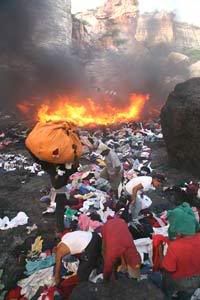
Pedernales is home to one cement factory, an aluminum mining operation and a facility whose sole purpose is to sort and burn used clothing from North America.The poor would scavenge through the clothes, but after one was killed beneath the delivery truck, the soldiers now burn the clothing:
In the past an armed guard accompanied the delivery truck taking unwanted clothing from the Pedernales facility to a dump. Scavengers at the site would collect the garments to sell in shops or to local merchants.
That custom has changed, largely due to the frenzy over potentially valuable clothing in the piles.
Velez said sometimes there's a great find among the clothing heaps, which explains the occasional media image of poor Caribbeans dressed in designer shirts and hats.
It's the quest for those high-quality garments that led to tragedy and even one death among the scavengers.
"There are packs that hold jeans and very valuable stuff ... so people start jumping on the truck as it is moving," recounted Velez.
"One guy got entangled with the tire, and it ran over him and killed him. They have had many accidents like broken legs when the [clothing] packs fall on people."
After the fatal accident, the truckers began routinely setting the clothes on fire to discourage people from attacking the vehicle to scavenge the contents.
In what Velez calls a symbiotic relationship, now the driver and guard will allow the scavengers 10 minutes of sifting, in exchange for manually unloading the sacks of clothes that get stuck in the cargo bay when the truck dumps its load.
Once that time is up, the driver and guard, who work for the clothes sorting facility, set the piles ablaze.